PATENT PENDING

PowerGrid Sync

Grid resilience that heals itself.

Revolutionary self-healing power grid nodes with ferrofluid routing and shape-memory alloys. Autonomous fault isolation in 40-50ms. Zero maintenance. 40-year lifespan. The future of electric grid infrastructure is here.
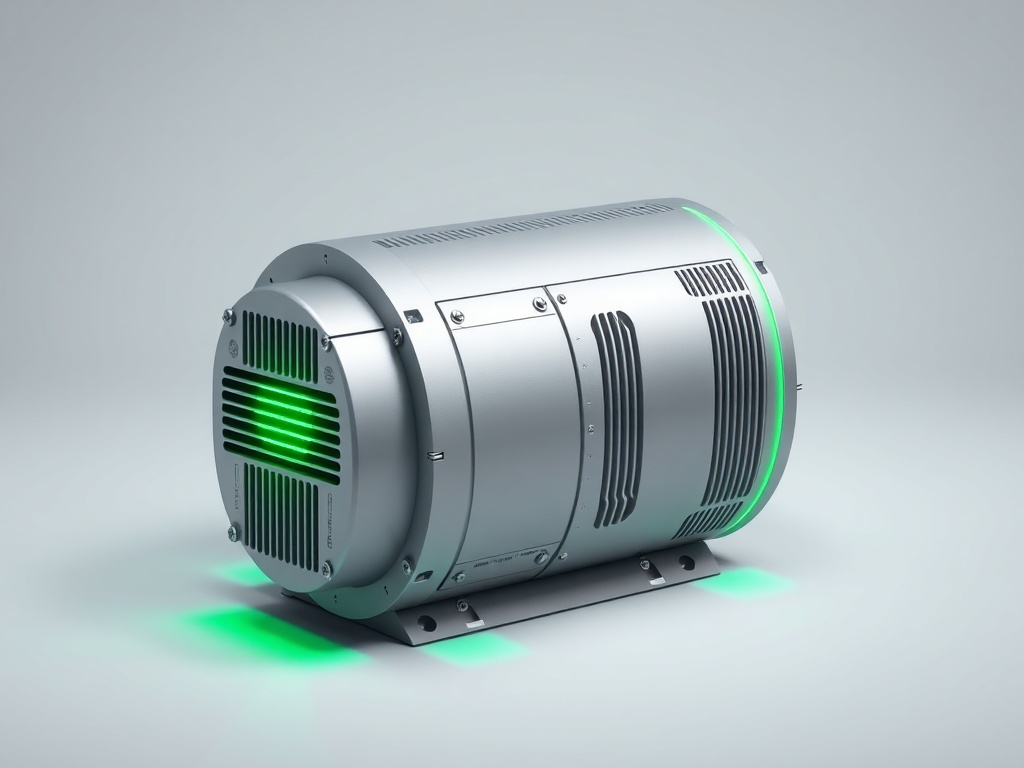
PowerGrid Sync 3D Product Render

Why Grid Infrastructure Needs to Evolve

2.5M

Annual Outages (North America)

Unplanned power interruptions cost utilities and consumers $40B+ annually in emergency repairs, lost revenue, and customer dissatisfaction.

5-60 sec

Conventional Response Time

Traditional circuit breakers take 5-60 seconds to isolate faults. Cascading failures propagate during this delay.

20-30 yrs

Limited Lifespan

Grid components fail at predictable intervals, requiring expensive replacement cycles and constant emergency maintenance programs.

Revolutionary Technology: How It Works

PowerGrid Sync combines ferrofluid microfluidics, shape-memory alloy lattices, and fault-current harvesting to create the first truly autonomous, self-healing power grid component.

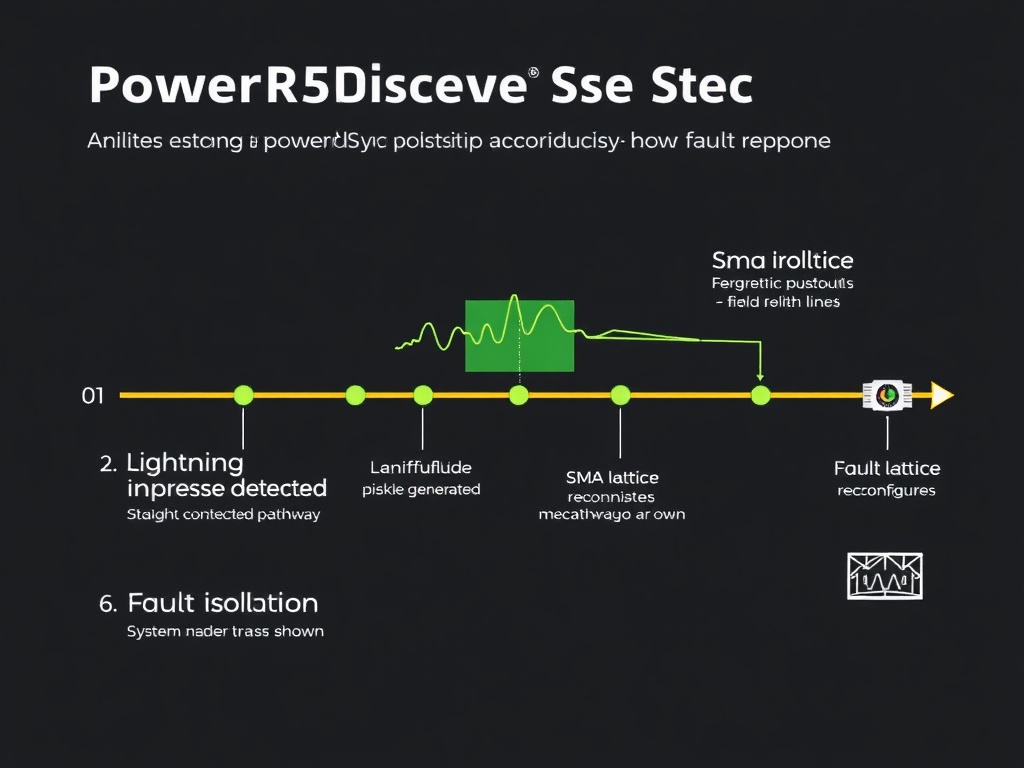
PowerGrid Sync Fault Response Sequence

Autonomous Fault Response in 40-50ms

Detection

Fault current spike identified

Harvest

Energy extracted from fault

Pulse

Magnetic field generated

Reroute

Ferrofluid flows to bypass

Lock

SMA lattice reconfigures

Isolated

Fault completely cleared

Ferrofluid Microfluidics

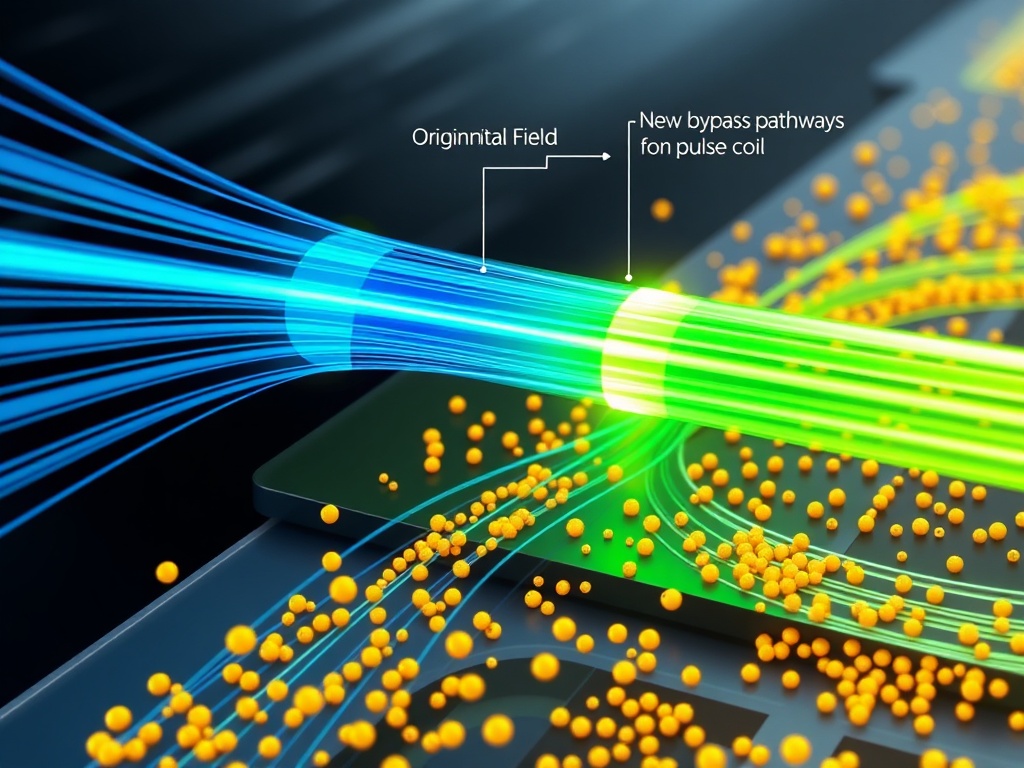
Ferrofluid Flow Visualization

Custom ferrofluid with iron oxide nanoparticles (5-15nm) suspended in high-dielectric synthetic oil. Under magnetic field pulses, particles rearrange into pre-designed bypass channels, creating alternative conductive pathways in milliseconds.

  • ✓ 5-15nm particle size for rapid response
  • ✓ Custom cobalt/manganese/gadolinium doping
  • ✓ Ceramic nanoparticle arc suppression
  • ✓ Biodegradable carrier fluid (zero SF₆)

Shape-Memory Alloy Lattice

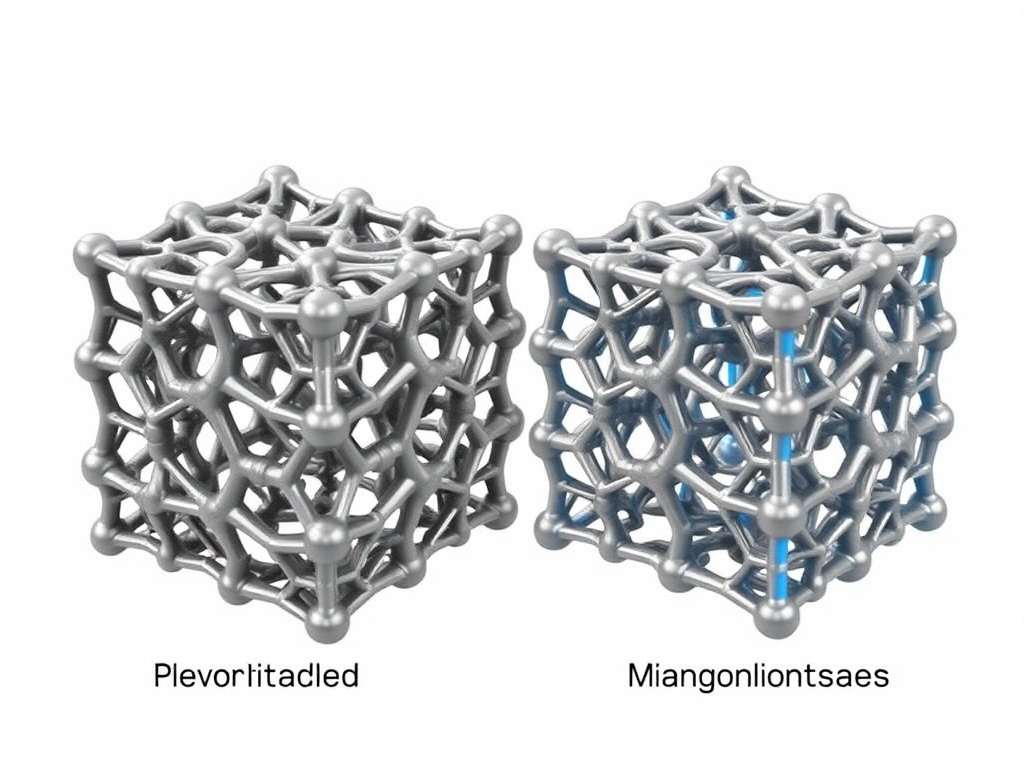
SMA Lattice Structure

Titanium-nickel-palladium base alloy doped with gadolinium and dysprosium. During fault events, Joule heating triggers a martensitic phase transformation that locks the new ferrofluid configuration permanently until reset.

  • ✓ Martensitic transformation at 75-85°C
  • ✓ 40% porosity for ferrofluid flow
  • ✓ 3D-printed or investment-cast precision
  • ✓ >10,000 cycle endurance

Fault-Current Harvesting

The fault current itself provides the energy for activation. An inductive coupling circuit harvests transient voltage spikes from the fault, charging a high-voltage capacitor bank that powers the magnetic pulse coil. Zero external power required.

  • ✓ Self-powered activation (no battery needed)
  • ✓ 10 Farad supercap energy storage
  • ✓ 3.5-8 kA pulse current
  • ✓ 2.5-4.0 Tesla peak magnetic field

Autonomous Monitoring & Reporting

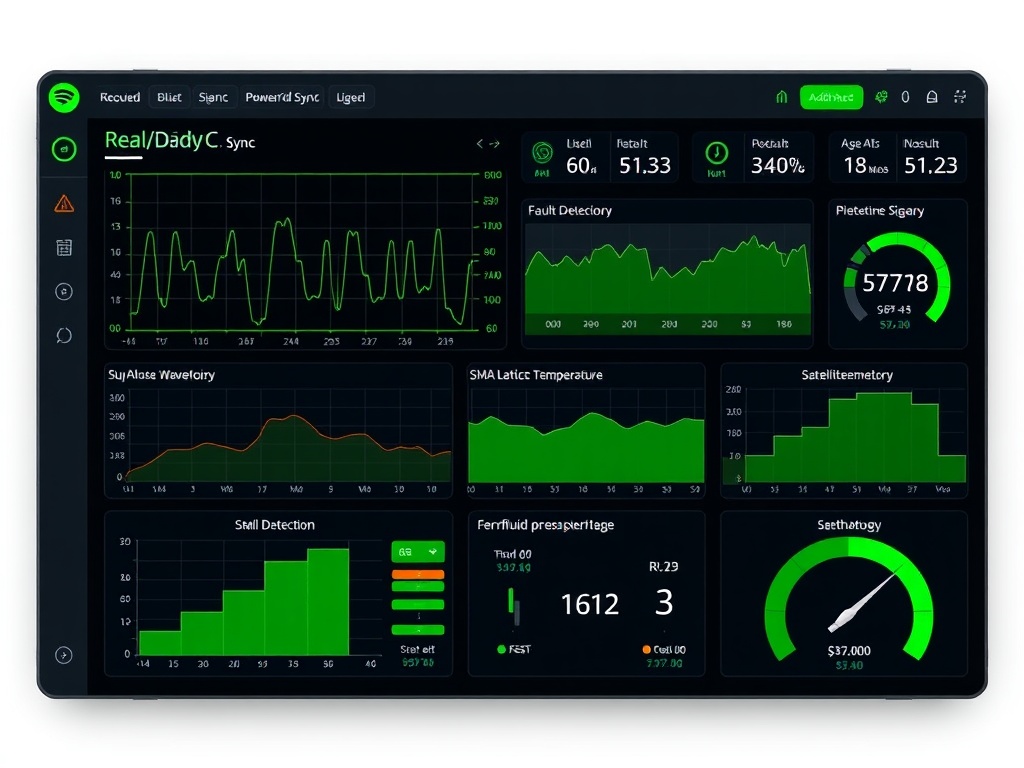
PowerGrid Sync Dashboard

Every fault event is captured with 10 MSPS sampling, compressed, and transmitted via Iridium satellite modem. Real-time waveform analysis enables predictive maintenance and AI-driven grid optimization.

  • ✓ Rogowski coil + optical current sensing
  • ✓ 10 MSPS waveform capture
  • ✓ Iridium + LoRaWAN telemetry
  • ✓ IEC 61850 SCADA integration

Engineered for Every Grid Level

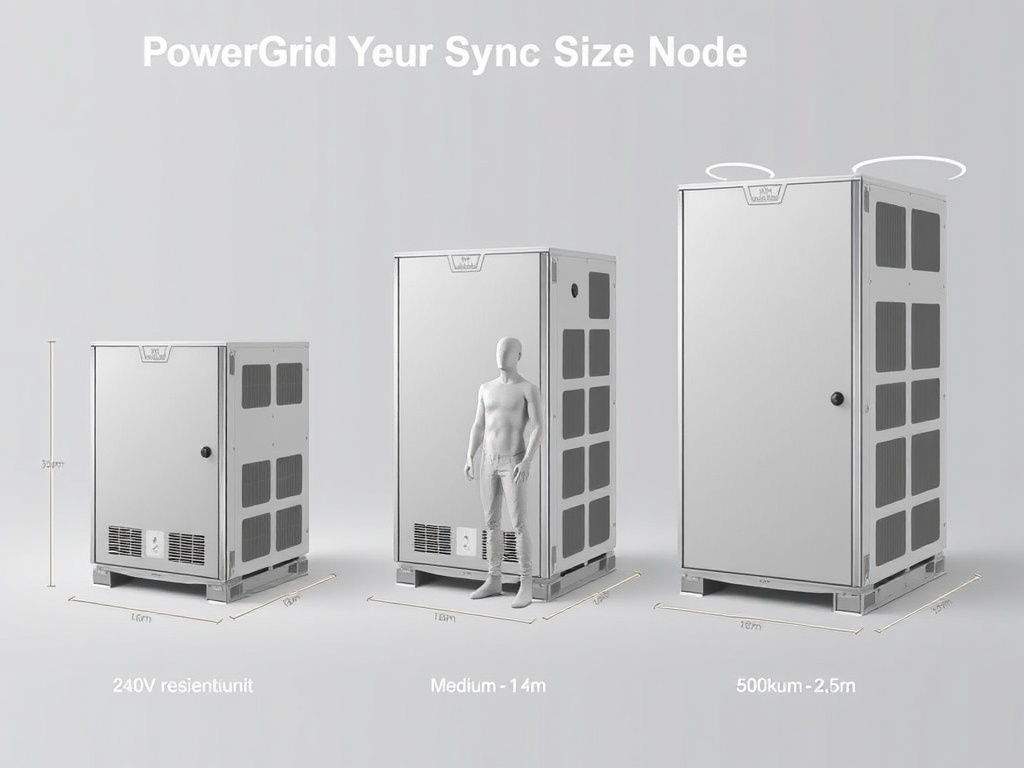
PowerGrid Sync scales from residential 240V to transmission 500kV—one technology, unlimited deployment.

PowerGrid Sync Voltage Class Comparison

Level 1: Residential (240V)

Size: 0.8m diameter, 180 kg
Application: Smart meter transformers, residential feeder reclosers
Cost: $25,000-35,000
Response: 40-50ms fault isolation
Deployment: Standard utility pole pad retrofits

VOLUME TARGET Level 2: Distribution (15kV)

Size: 1.4m diameter, 850 kg
Application: Primary feeder reclosers, substation load protection
Cost: $85,000-120,000
Response: 40-50ms autonomous isolation
Deployment: Replaces conventional three-phase breaker banks

Level 3: Transmission (500kV)

Size: 2.5m diameter, 4,200 kg
Application: EHV transmission line protection, series compensation
Cost: $800,000-1,200,000
Response: 40-50ms cascade failure prevention
Deployment: One node per transmission tower

Deep Technical Architecture

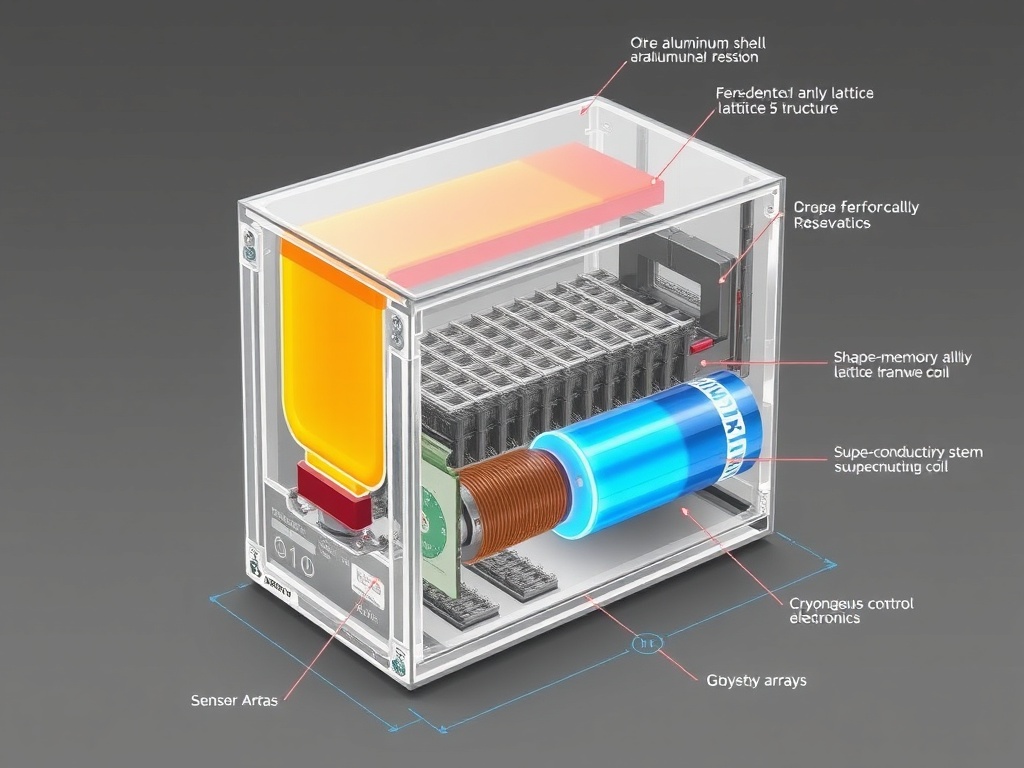
PowerGrid Sync Cross-Section Diagram

Ferromagnetism at Nanoscale

Ferrofluid Nanoparticles
  • Composition: Fe₃O₄ with Co, Mn, Gd doping
  • Size: 8-12 nm (optimized for Brownian motion)
  • Saturation: 95-100 emu/g at room temperature
  • Thermal Stability: Curie point 595-610°C
  • Carrier Fluid: ISO VG46 polyol ester (biodegradable)

Shape Memory Alloy Specifications

  • Base Alloy: Ti₅₀Ni₄₅Pd₅ (ternary composition)
  • Dopants: Gd (0.3-0.5 wt%), Dy (0.2-0.4 wt%), Nb (0.5-1.0 wt%)
  • Mₛ (Martensitic Start): 75-85°C
  • Recovery Stress: 400-600 MPa
  • Endurance: >10,000 transformation cycles
  • Density: 6.45 g/cm³
  • Fatigue Life: Tested to 40-year utility grid lifespan

Passive Cryogenic System

PowerGrid Sync uses a passive Gifford-McMahon thermoacoustic cryocooler to maintain liquid nitrogen at 77K for a superconducting current-sensing coil. Unlike active cooling systems, this requires no external power—it leverages ambient temperature differentials to drive the cooling cycle.

  • ✓ Passive radiator (no compressor noise)
  • ✓ 20W cooling capacity at 60 Hz
  • ✓ Zero external power required
  • ✓ Annual LN₂ top-up (~30% boil-off)
  • ✓ Failsafe thermal activation mode

Operating Temperature Profile

In extreme cold climates (−50°C ambient): Cryocooler operates with maximum ΔT gradient. In warm climates (+60°C): Passive radiator still maintains 77K within tolerance. Failsafe mode available if cryocooler fails, activating thermal resistive heating (~100ms response instead of 40-50ms).

PowerGrid Sync vs Traditional Circuit Breakers

A generation shift in grid protection technology

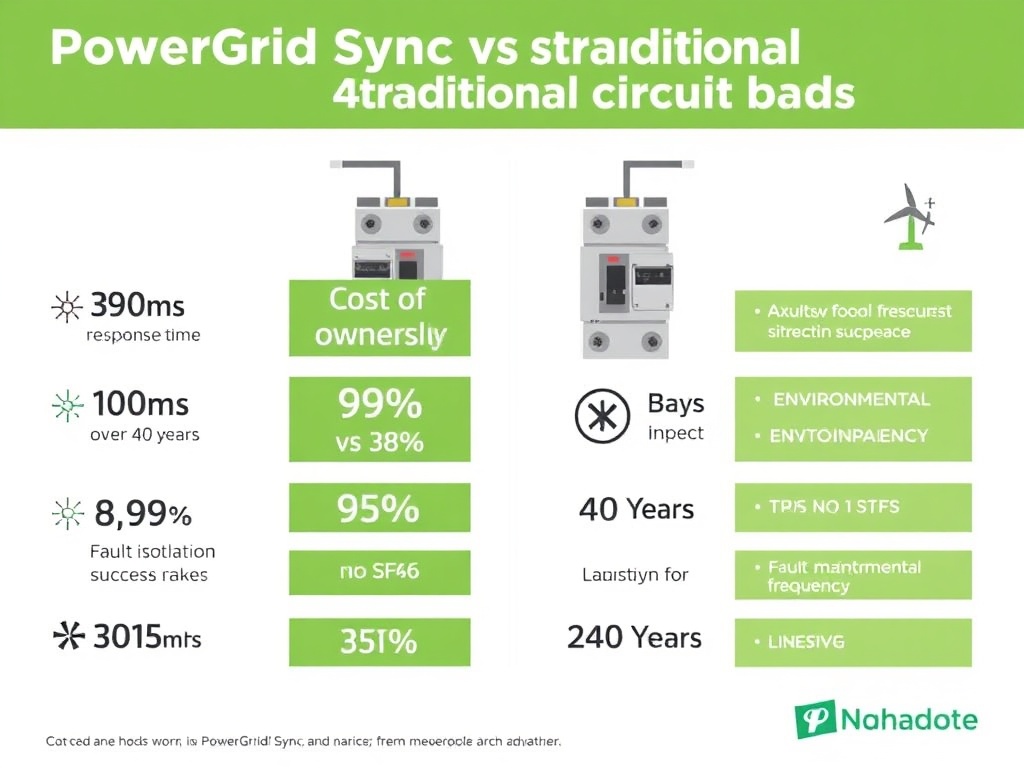
PowerGrid Sync vs Traditional Breakers Comparison

PowerGrid Sync Advantages

  • 40-50ms response (vs 5-60s conventional)
  • Self-healing - No component replacement needed
  • 40-year lifespan (vs 20-30 years)
  • Zero SF₆ emissions (environmental advantage)
  • Autonomous operation - No external power
  • 99% fault isolation success vs 85%
  • Full waveform logging for AI predictive maintenance

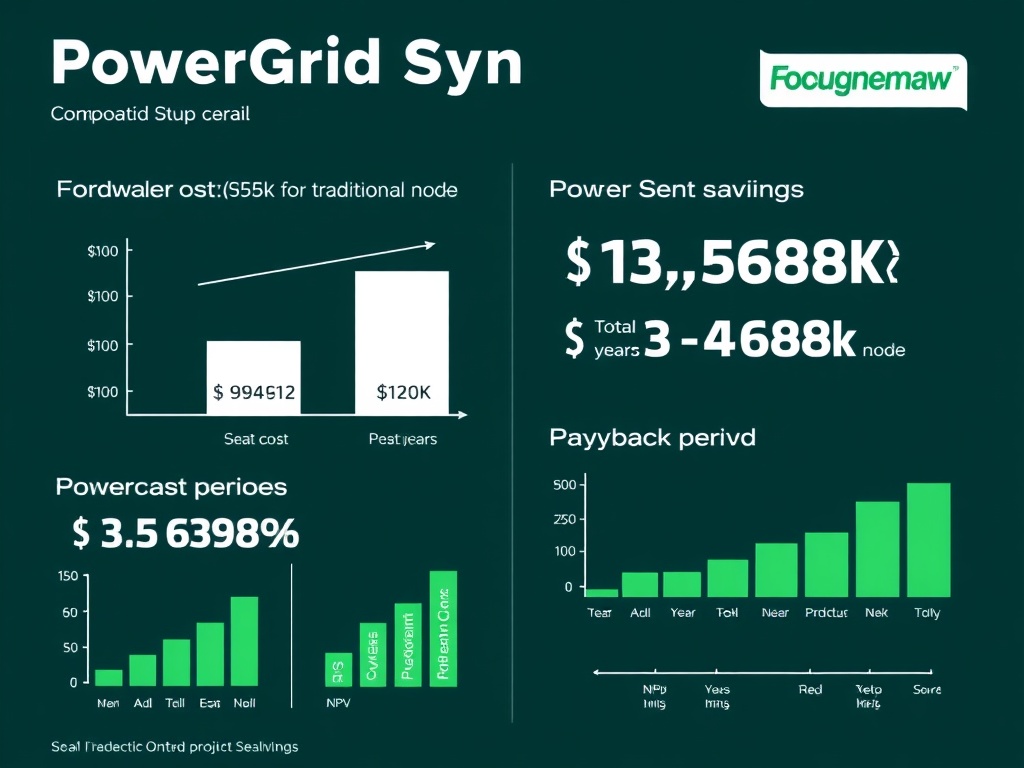
Financial Impact (40-Year TCO)

Conventional Node

  • Hardware: $15,000
  • 5× Emergency repairs: $40,000
  • Maintenance cycles: $25,000
  • Outage costs: $100,000-500,000
  • Total: $180,000-560,000

PowerGrid Sync Node

  • Hardware: $95,000
  • Zero emergency repairs: $0
  • Minimal maintenance: $2,000
  • Avoided outage costs: $90,000+ saved
  • Total: $97,000-105,000

💰 Net Savings: $63,000-458,000 per node

Payback period: 3-5 years on premium equipment cost

Real-World Deployment

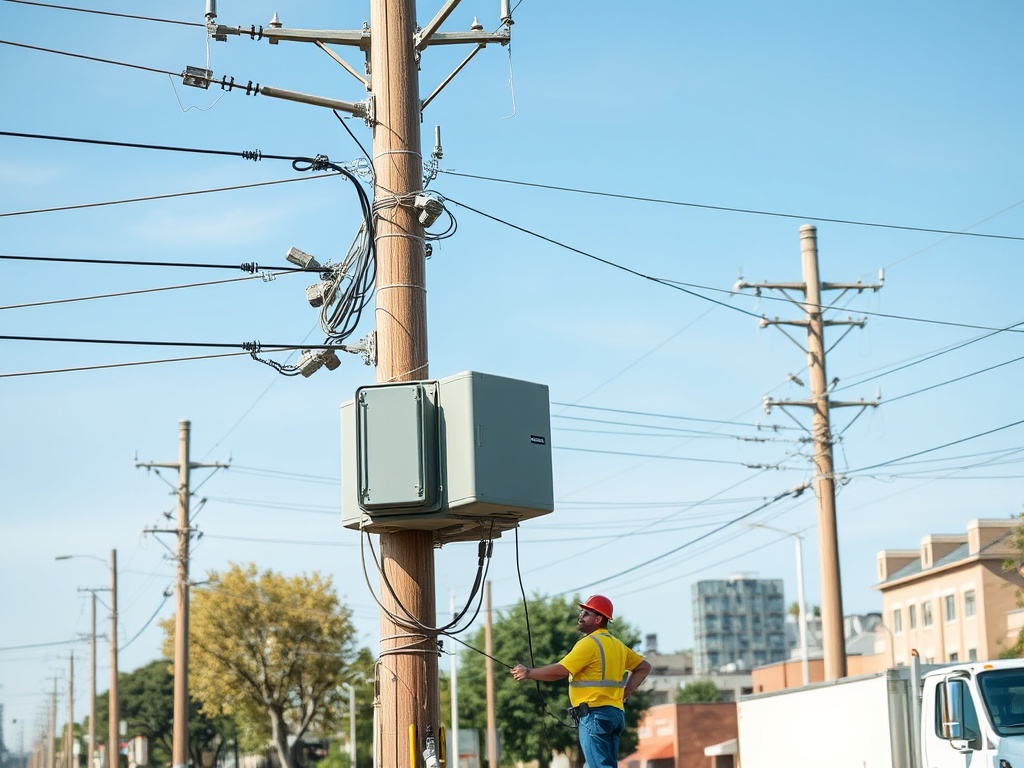
See PowerGrid Sync integrated into modern utility infrastructure

PowerGrid Sync Utility Pole Deployment

Geographic Opportunity Map

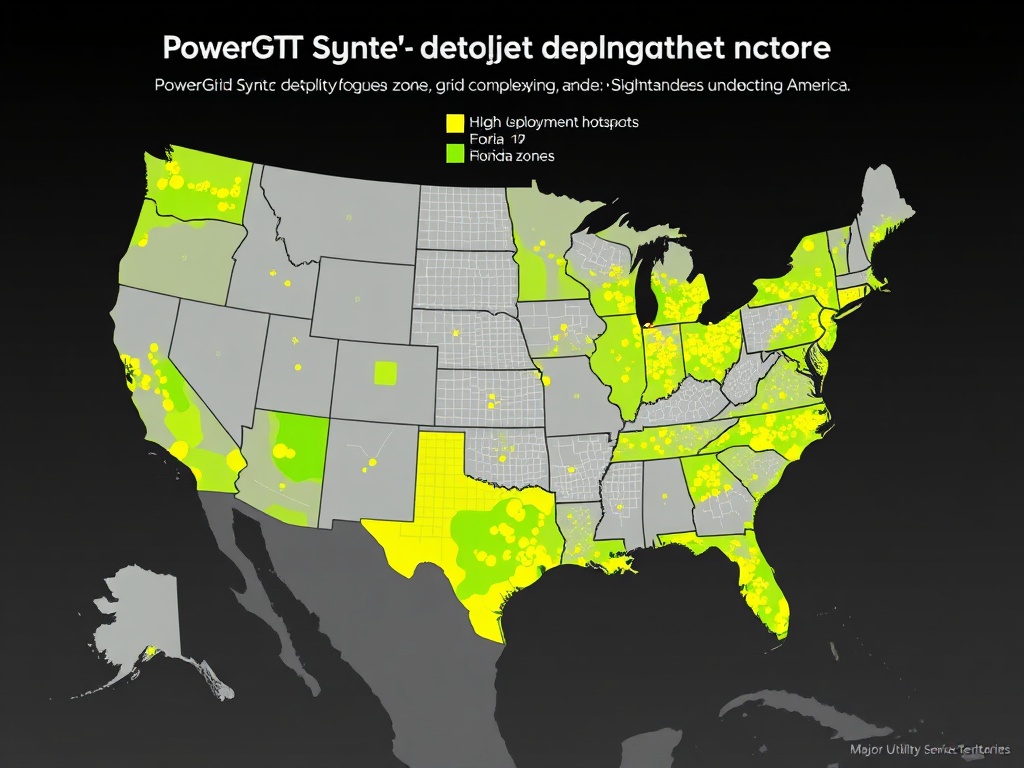
PowerGrid Sync Deployment Heatmap

Priority deployment zones: Lightning-prone regions (Florida, Texas, Great Plains), aging grid infrastructure (Northeast), and climates with extreme weather. These regions see 2-8 fault events per year, making the ROI compelling.

Market Size & Timeline

  • TAM (Total Addressable Market):
    $220 billion (global grid modernization, 20-year cycle)
  • SAM (Serviceable Addressable):
    $65 billion (North America + Europe)
  • SOM (Serviceable Obtainable):
    $8 billion (Year 10 projection, 8-12% market capture)

Go-to-Market Phases

  • Y1-2: Pilot programs (5-10 utilities)
  • Y2-4: Early commercial (50-100 units/yr)
  • Y4+: Mainstream adoption (5,000+ units/yr)

Financial ROI & Utility Economics

Financial ROI Analysis
3-5 yrs

Payback Period

Premium hardware cost amortized through avoided emergency repairs and outage revenue loss prevention.

$458k

Max 40-Yr Savings

Per node, accounting for all maintenance, repair, and customer outage costs over full lifecycle.

65-80%

Outage Reduction

Fewer cascading failures, faster isolation, and autonomous operation reduce customer outage duration significantly.

Environmental Commitment

Sustainable technology designed for a cleaner grid future

Zero SF₆

No sulfur hexafluoride gas—eliminating a greenhouse gas 23,500× more potent than CO₂. Ceramic nanoparticles handle all arc suppression.

Biodegradable

Ferrofluid carrier oil is synthetic polyol ester, fully OECD 301B biodegradable. Safe for environment at end-of-life.

Recyclable

All components (ferrofluid, SMA alloy, aluminum housing) fully recoverable via standard industrial recycling. Zero hazardous waste.

Low-Rare-Earth

Minimal rare-earth use (gadolinium, dysprosium <1 wt%). Far less supply-chain impact than competing technologies.

Frequently Asked Questions

How fast is the response time compared to conventional breakers? +

PowerGrid Sync isolates faults in 40-50 milliseconds (autonomous, no human intervention). Conventional circuit breakers require 5-60 seconds, during which cascading failures can propagate across the grid. This 100-1000× speed improvement is critical for grid stability.

What happens if the cryocooler fails? +

PowerGrid Sync includes a thermal failsafe mode. If the cryogenic system fails, the node activates resistive heating elements to reach the SMA transformation temperature. Response time increases to ~100ms (still 50× faster than conventional), but full fault isolation is maintained. Annual LN₂ top-ups (~$300) keep the primary path operational.

How does fault-current harvesting actually work? +

During a fault, the current spike induces a transient voltage across a high-Q sensing coil. This voltage charges a supercapacitor bank (10 Farads, 400V nominal) in microseconds. The stored energy then powers the magnetic pulse coil, which generates the 2.5-4.0 Tesla field needed to activate ferrofluid rerouting. Zero external power required—the fault itself provides all activation energy.

What is the expected lifespan of a PowerGrid Sync node? +

Design life is 40+ years (2× conventional equipment). The SMA lattice has been tested to >10,000 transformation cycles, which extrapolates to 40-year lifespan under typical utility fault frequency (2-4 events/year). Ferrofluid is stable indefinitely when sealed; main wear item is the cryocooler (serviceable, ~$5,000 replacement every 15-20 years).

How does this integrate with existing SCADA systems? +

PowerGrid Sync supports multiple integration pathways: IEC 61850 fiber-optic isolation (hardwired to substation SCADA), Iridium satellite modem (remote waveform transmission), and optional LoRaWAN for mesh networking. Full waveform data (10 MSPS sampling) enables AI-driven predictive maintenance and grid optimization algorithms.

What is the environmental impact compared to SF₆ breakers? +

Conventional circuit breakers use SF₆ gas (GWP = 23,500, ~50-200 kg CO₂-eq per node over 40 years due to leakage). PowerGrid Sync uses ceramic nanoparticles for arc suppression—zero greenhouse gas emissions. Ferrofluid carrier oil is biodegradable, and all components are recyclable. Net environmental payoff by year 10-12 of operation.

Ready to Transform Your Grid?

Join leading utilities pioneering the future of resilient, self-healing power infrastructure. Get in touch for pilot partnerships, technical deep-dives, or investor discussions.